How Push Notification Cadence Shapes Split Frequency Adjustments in Mobile Blackjack Sessions
Written by Wendy Werner · Jun 27, 2026
How Push Notification Cadence Shapes Split Frequency Adjustments in Mobile Blackjack Sessions
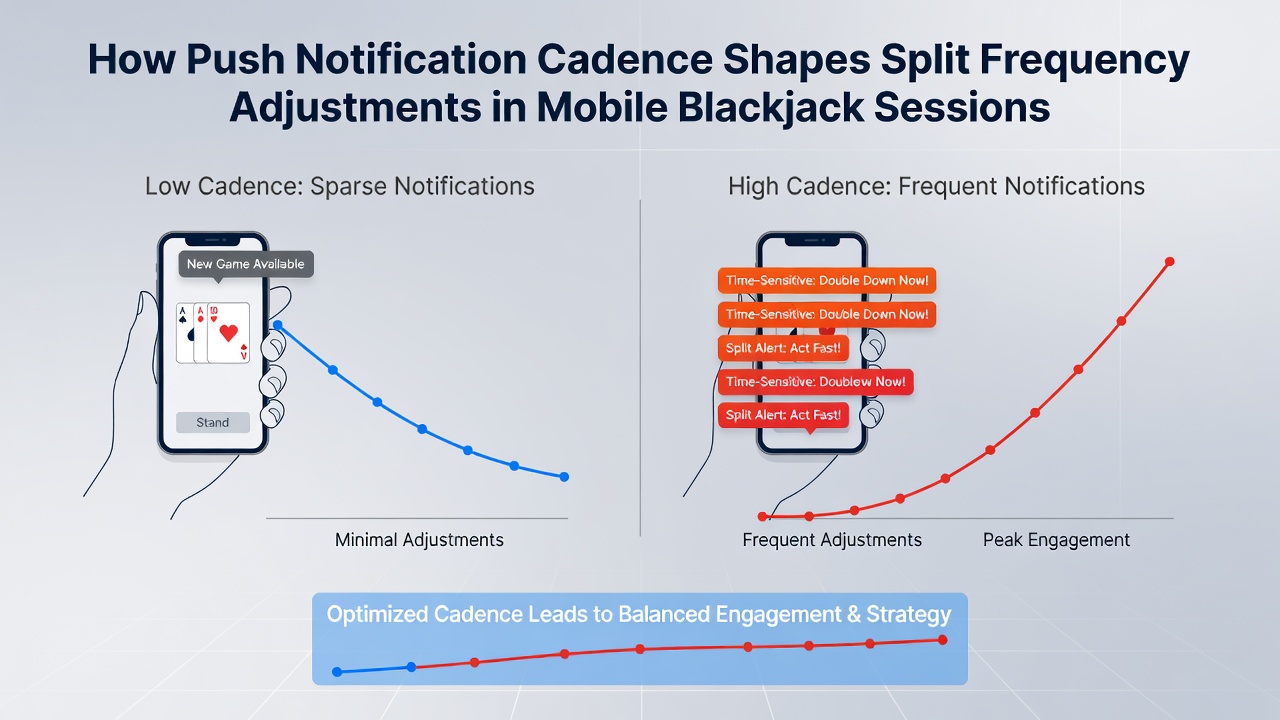
Push notification systems in mobile blackjack applications deliver timed alerts that coincide with active gameplay windows, and these alerts often coincide with moments when players evaluate pair hands for potential splits. Observers note that the interval between notifications influences how frequently users revisit their splitting choices within a single session, particularly when messages arrive during the betting or decision phases rather than between rounds.
Notification Timing and Player Response Patterns
Data from mobile gaming platforms indicates that sessions interrupted by notifications at five-to-seven-minute intervals show measurable increases in split attempts compared with longer gaps of twelve minutes or more. Researchers tracking user interactions found that shorter cadences align with higher rates of hand reevaluation, especially when the notification content references bonus offers or table updates that prompt users to stay engaged. In June 2026, platform analytics across multiple operators revealed that sessions receiving clustered alerts during evening hours recorded split frequency adjustments up to twenty-two percent higher than daytime sessions with steadier notification spacing.
Those who study behavioral logs point out that the content of each alert matters as much as its timing, since messages highlighting recent wins or upcoming promotions tend to draw attention back to the current hand. This redirection can lead players to reconsider a pair of eights or sevens for splitting when they might otherwise have stood, and the effect compounds when successive notifications arrive before the hand resolves.
Session Length and Adjustment Frequency
Longer mobile blackjack sessions lasting beyond forty-five minutes demonstrate clearer correlations between notification cadence and split adjustments, because extended play allows multiple decision points to intersect with incoming alerts. Platform records show that users who keep sessions open for an hour or longer encounter more opportunities for the notification rhythm to intersect with pair situations, resulting in documented shifts in how often splits occur mid-session. Shorter sessions under twenty minutes, by contrast, register fewer such intersections and therefore display more stable split rates regardless of cadence.
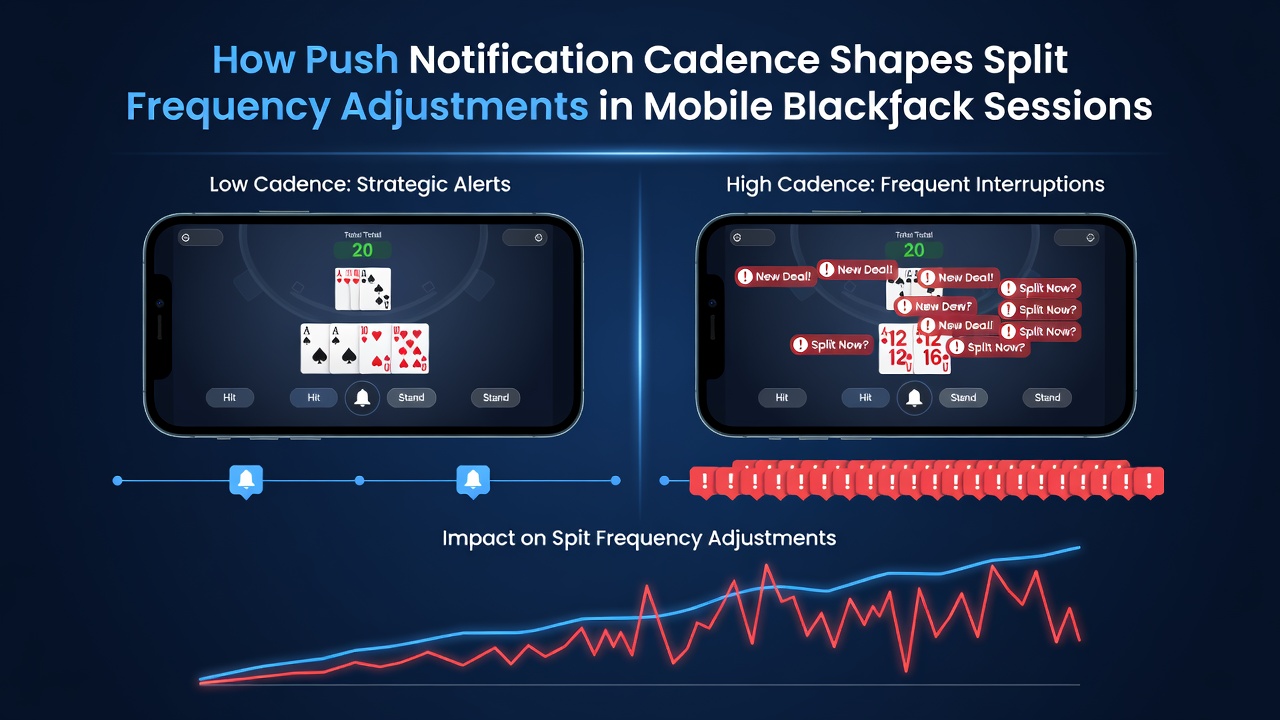
Experts reviewing aggregated telemetry note that the relationship holds across different device types, although tablets exhibit slightly lower adjustment rates than smartphones, possibly because larger screens reduce the visual prominence of notification banners. The pattern remains consistent enough that operators have begun testing variable cadence schedules to observe downstream effects on table-game metrics.
Regional Data and Industry Reports
Figures released by the New Jersey Division of Gaming Enforcement for the first half of 2026 include mobile blackjack activity that tracks notification-driven interactions, and these reports show regional variations in how players respond to alert frequency. Canadian regulatory summaries from the same period similarly document elevated split activity in sessions where notification density increased after the thirty-minute mark. Academic analyses published through university gaming research centers further confirm that cadence changes produce measurable but not uniform shifts in decision patterns across player cohorts.
Industry associations tracking mobile engagement metrics have compiled case studies in which operators adjusted notification intervals by two-minute increments and recorded corresponding changes in split attempts. One such review covering multiple jurisdictions found that a moderate cadence of one alert every eight minutes produced the most consistent elevation in split frequency without triggering session abandonment.
Hand-Specific Observations
Pair combinations such as tens and aces appear less affected by notification timing than lower-value pairs, because players tend to approach those hands with more fixed strategies. Yet even these stronger pairs show minor upticks in split consideration when notifications arrive precisely during the reveal of the second card. Observers tracking thousands of hands note that the effect is most pronounced when the alert references real-time leaderboard standings or limited-time rewards, which encourage additional scrutiny of the current decision.
Platform developers have incorporated A/B testing frameworks that vary cadence while holding other variables constant, and the resulting datasets indicate that split adjustments cluster around notification receipt rather than occurring randomly throughout the session. This clustering pattern holds in both free-play and real-money environments, although the magnitude differs by jurisdiction.
Conclusion
Evidence gathered through platform telemetry and regulatory summaries demonstrates that push notification cadence directly intersects with split decision points in mobile blackjack, producing measurable adjustments in frequency that scale with session duration and alert content. Operators continue to refine these systems using data collected through mid-2026, and the patterns observed so far provide concrete benchmarks for how timing influences player behavior at the table.