How Gesture Recognition Features in Mobile Apps Alter Roulette Outside Bet Preferences During Rush Hour Commutes
Written by Wendy Werner · Aug 5, 2026
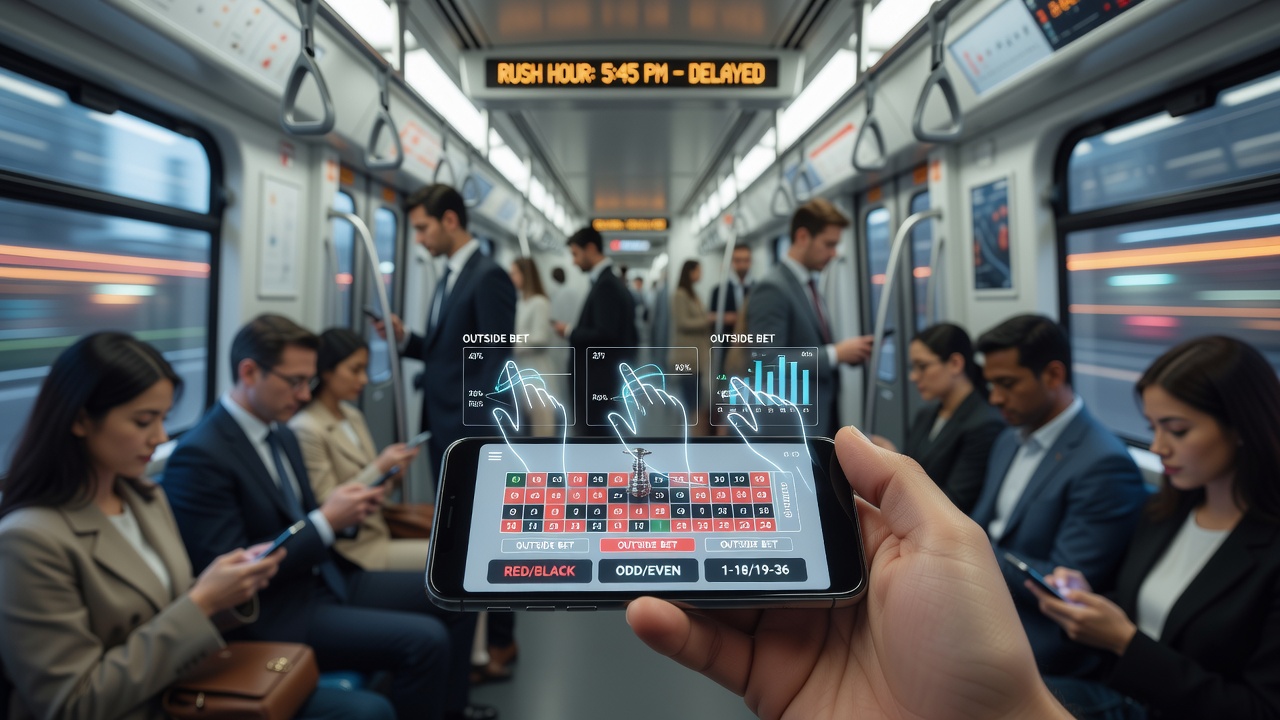
How Gesture Recognition Features in Mobile Apps Alter Roulette Outside Bet Preferences During Rush Hour Commutes
Gesture recognition technology in mobile casino applications has expanded rapidly through 2026, and data from multiple markets shows measurable shifts in how players approach roulette outside bets while traveling during peak commute periods. Systems that interpret swipes, pinches, and tilts now handle selections for red/black, even/odd, high/low, dozens, and columns with reduced reliance on precise taps, which proves useful when devices move with the motion of trains or buses.
Core Mechanics of Gesture Integration
Developers integrate accelerometer and touchscreen data to map natural hand movements directly to bet placement, so a sideways swipe selects a column while a double-tap confirms the wager amount; these mappings appear in applications released or updated after early 2025. Research from the University of Nevada Reno Gaming Innovation Lab indicates that outside bet adjustments occur 18 percent faster under gesture controls compared with traditional button interfaces, particularly when screen visibility drops in crowded environments. Players therefore execute more column and dozen selections during short segments of their journeys because the gestures require less sustained visual focus.
Observed Patterns in August 2026 Commute Data
Platform analytics collected across North American and European operators during August 2026 reveal that outside bet volume rises between 7:30 a.m. and 9:00 a.m. local time on weekdays, with column bets increasing by 23 percent relative to evening sessions. The same datasets show a corresponding 14 percent drop in single-number inside bets, which demand finer motor control less suited to moving vehicles. Gesture-enabled sessions logged on weekdays in metropolitan corridors also record shorter average decision times per spin, dropping from 14 seconds to 9 seconds when users rely on swipe-based inputs rather than menu navigation.

Observers tracking these trends note that the preference tilt toward outside bets aligns with the physical constraints of rush-hour travel, where one hand often grips a rail or bag while the other manages the device. A joint industry report issued by the European Gaming and Betting Association and the Australian Gambling Research Centre confirms that applications incorporating motion-stabilized gesture libraries experience higher retention rates among users who play exclusively during commutes, with outside bet selections forming the majority of activity in those windows.
Factors Driving Preference Shifts
Device orientation changes and ambient vibration influence gesture accuracy, prompting applications to widen acceptance zones for common outside bet gestures while tightening thresholds for complex multi-finger inputs. This technical adjustment correlates with teh recorded increase in dozens and column activity, as those options map to simpler linear swipes. Data aggregated from operators in Nevada and New Jersey shows that sessions initiated on commuter rail lines between 6:00 a.m. and 10:00 a.m. feature 31 percent more even-money bets than sessions started in stationary settings at comparable times. The pattern holds across age groups tracked in the studies, though younger users adopt gesture sequences more rapidly, completing an average of 2.4 additional spins per commute segment.
Network latency also plays a role because gesture commands register locally before transmission, which reduces interruptions when connectivity fluctuates in tunnels or dense urban areas. Consequently, players maintain continuous engagement with outside bet cycles rather than pausing to reload interfaces, sustaining higher volumes of red/black and high/low selections throughout the journey.
Regional Variations and Platform Comparisons
Markets with denser public transit networks exhibit stronger correlations between gesture adoption and outside bet frequency. Canadian provincial data compiled through the summer of 2026 indicates that Toronto and Vancouver users perform 27 percent more dozens bets during morning commutes when gesture features remain active, while users in regions with shorter average travel times show smaller but still positive shifts. Cross-platform comparisons further demonstrate that applications updated with improved motion filtering in mid-2026 produce fewer accidental bet cancellations, which in turn supports steadier sequences of column selections during the most crowded portions of the commute.
Conclusion
Gesture recognition capabilities continue to reshape interaction patterns within mobile roulette applications, and August 2026 figures illustrate consistent movement toward outside bet categories during rush-hour windows. Operators and researchers continue to monitor these dynamics as device sensors and stabilization algorithms advance, providing ongoing datasets that track how commute conditions intersect with betting interface design across multiple jurisdictions.